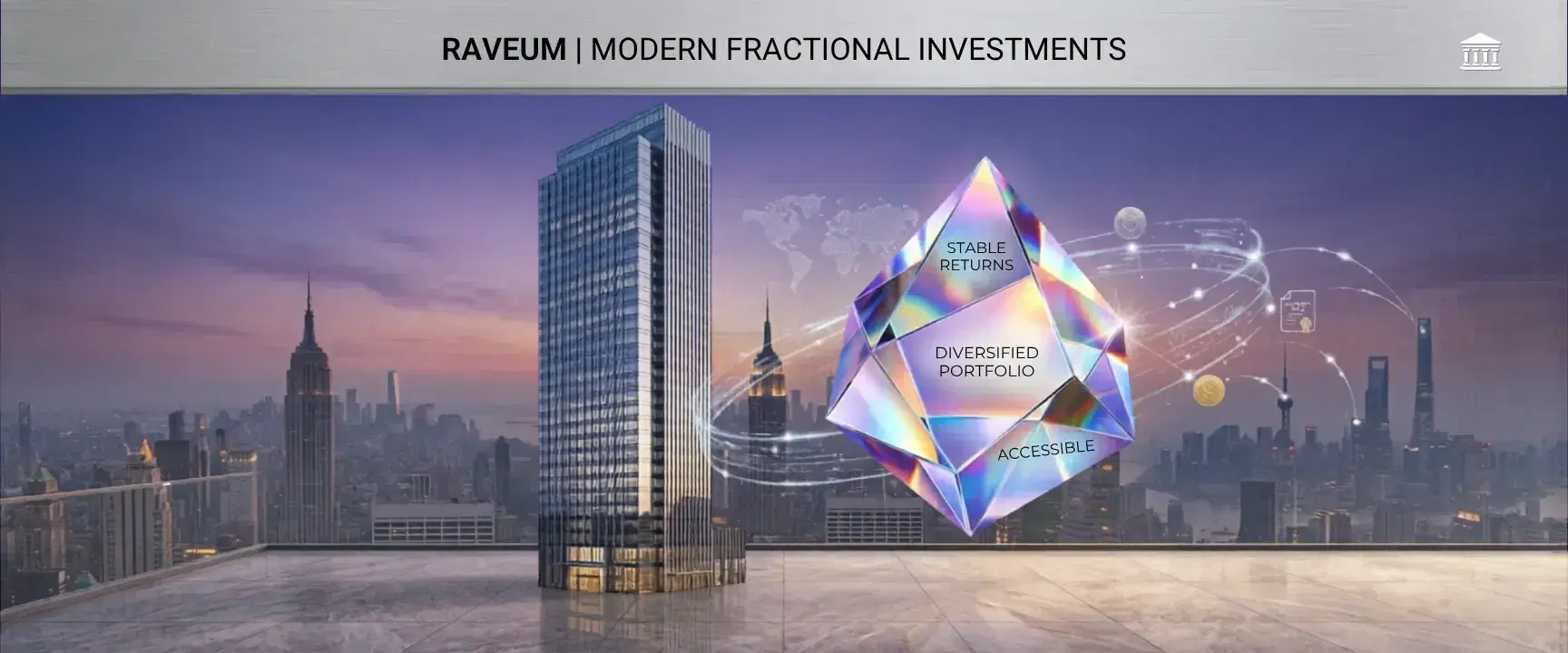
A Strategic Analysis for Global Investors
Periods of global uncertainty, whether driven by inflation, geopolitical tensions, interest rate volatility, or economic slowdowns, often force investors to reassess their portfolios. While traditional equities can experience high volatility and fixed-income instruments may struggle against inflation, U.S. real estate has consistently emerged as a relatively stable and highly desirable investment class.
Accessing this stability of international diversification for Indian investors used to be complex and capital-intensive. Today, platforms like Raveum are completely reimagining how the world invests in U.S. real estate. Raveum offers a secure, compliant, and easy way to invest in fractional ownership, so you can focus on capital preservation, stable income, and currency diversification.
What Defines “Safety” in an Investment?
An asset is generally considered relatively safe when it offers predictable cash flows, low correlation with market volatility, tangible asset backing, and long-term demand fundamentals. U.S. real estate, particularly in the commercial real estate and multifamily sectors, frequently meets these vital criteria.
Why U.S. Real Estate Performs During Uncertainty and How Raveum Maximizes It:
1. Income Stability Through Lease Structures
Unlike stocks that rely heavily on market sentiment, US rental property returns are generates through contractual lease agreements. Raveum specializes in pre-leased, income-generating U.S. real estate, making dollar income investment strategies more accessible through predictable quarterly dollar income while the platform handles all operations and asset management.
2. Tangible Asset Backing with Institutional Grade Screening
Real estate is a physical asset with intrinsic value, providing a downside cushion compared to purely financial instruments. However, asset selection is critical. Raveum ensures safety by applying institutional-grade due diligence to every property. Each asset undergoes in-depth underwriting, financial analysis, and tenant evaluation before it is ever listed on the platform.
3. The Ultimate Inflation Hedge
Real estate is a natural hedge against inflation because rental income and property values often rise in tandem with inflation metrics. As replacement costs increase, asset pricing is supported, and Net Operating Income (NOI) frequently grows, which directly boosts the property's valuation.
4. Strong Demand Drivers and Proven Operator Track Records
The U.S. boasts one of the most mature, transparent, and legally sound real estate markets globally. To capitalize on this, Raveum strictly partners with vetted U.S. real estate sponsors who possess proven track records and institutional standards. For example, Raveum highlights sponsor success in US multifamily real estate investment, including Colony Hills Capital’s 32% to 44% valuation increases across multifamily properties like Wynthrope Forest, Canterbury Apartments, and Cameron Run Homes within just a few years.
5. The Dollar-Denominated Income Advantage
For global investors, earning income in USD acts as a powerful hedge against rupee depreciation and dramatically enhances overall global portfolio diversification. Raveum provides structured access to this dollar-denominated wealth creation.
The Raveum Advantage: Safe, Compliant, and Accessible
Investing in U.S. real estate historically required high capital, complex legal structuring, and deep local expertise. Raveum removes these barriers, making international diversification for Indian investors easier through structured U.S. real estate ownership.
When you invest through Raveum, you are utilizing a platform grounded in U.S. regulatory frameworks and SEC-aligned structures, backed by strict AML/KYC protocols. Capital is safeguarded because each investment is held through a dedicated U.S. entity that provides clear investor rights, legal protection, and transparent, ongoing tax reporting. Investors simply browse verified investments, review clear financials, and seamlessly invest through a globally compliant process.
Conclusion
So, is U.S. real estate safe during global uncertainty? While no investment is entirely risk-free, U.S. real estate is structurally more stable than many traditional asset classes. With predictable income streams, tangible asset backing, and a strong regulatory ecosystem, it is a premier defensive investment.
Raveum elevates this safety by removing the guesswork and operational friction. By providing fractional ownership in pre-vetted, institutional-grade properties managed by top-tier sponsors, Raveum makes building a high-performing, dollar-denominated U.S. real estate portfolio secure, compliant, and effortlessly accessible for the modern global investor.
Frequently Asked Questions
1. Is U.S. real estate safer than stocks during periods of uncertainty?
Yes, it is generally considered safer because it is backed by a physical asset and generates income through legally binding, long-term lease agreements. While stocks are highly susceptible to daily market sentiment and volatility, carefully selected real estate provides a predictable cash flow. Platforms like Raveum enhance this stability by exclusively offering pre-leased, professionally managed assets that distribute stable quarterly passive income in dollars.
2. How does real estate act as a hedge against inflation?
Real estate is a natural inflation hedge because as the cost of living rises, property values and rental rates typically increase as well. This means that the Net Operating Income (NOI), the rental income minus operating expenses, can grow over time, which directly supports and often increases the underlying value of the property even when inflation is high.
3. How does Raveum make U.S. real estate accessible to Indian and global investors?
Traditionally, cross-border real estate investing was blocked by high capital requirements and complex legal hurdles. Raveum democratizes this by offering fractional ownership starting at lower minimums. The platform is built for global investors, offering a seamless, digital investment flow that complies with strict AML/KYC protocols and U.S. regulatory standards.
4. What types of U.S. real estate are most stable, and what does Raveum offer?
Essential-service sectors like multifamily housing, healthcare, and essential retail show the strongest resilience because demand persists regardless of the economic climate. Raveum focuses on these high-quality, income-generating U.S. real estate opportunities. They specifically partner with experienced operators, such as Colony Hills Capital, who have proven track records in managing large-scale multifamily units with impressive historical valuation increases.
5. What are the biggest risks in U.S. real estate, and how does Raveum mitigate them?
The primary risks include interest rate fluctuations, tenant vacancy, and operator mismanagement. Raveum mitigates these risks through a rigorous, institutional-grade due diligence process. Before an asset is listed, Raveum conducts an in-depth financial analysis, underwrites the property, and evaluates tenant reliability. Furthermore, they only partner with vetted sponsors who possess institutional-level asset management capabilities.
6. Why is earning USD income important for an investor based outside the U.S.?
International diversification for Indian investors is earning returns in US Dollars that provides a crucial layer of currency diversification. For investors in countries like India, local currencies can depreciate against the dollar over time. By holding fractional U.S. real estate through Raveum, you earn quarterly dollar income, which acts as a powerful hedge against rupee depreciation and preserves your global purchasing power.
7. Is fractional ownership through Raveum legally secure and compliant?
Absolutely. Raveum is built on U.S. regulatory frameworks and utilizes SEC-aligned structures. When you invest, your capital does not go into a vague pool; instead, each investment is held through a dedicated U.S. entity. This ensures that you have clear, documented legal rights, dedicated tax reporting, and transparent oversight for every fractional U.S. real estate position you own.
References
- Deloitte. (2024). 2024 Commercial Real Estate Outlook. https://www2.deloitte.com
- Federal Reserve Bank of St. Louis. (2023). Commercial Real Estate Indicators. https://fred.stlouisfed.org
- National Association of Realtors. (2023). Real Estate Market Trends & Outlook. https://www.nar.realtor
- Reserve Bank of India. (2023). Liberalised Remittance Scheme (LRS). https://www.rbi.org.in
- U.S. Securities and Exchange Commission. (2023). Real Estate Investment Basics. https://www.sec.gov