When Kabir Israni first began thinking seriously about money, he was not thinking like a startup founder. He was thinking like a young man who had finally saved something.
Not the kind of money that gets private bankers excited. Just his own modest savings, earned early, protected carefully, and large enough to make him ask a question many young professionals eventually face: what should I do with this?
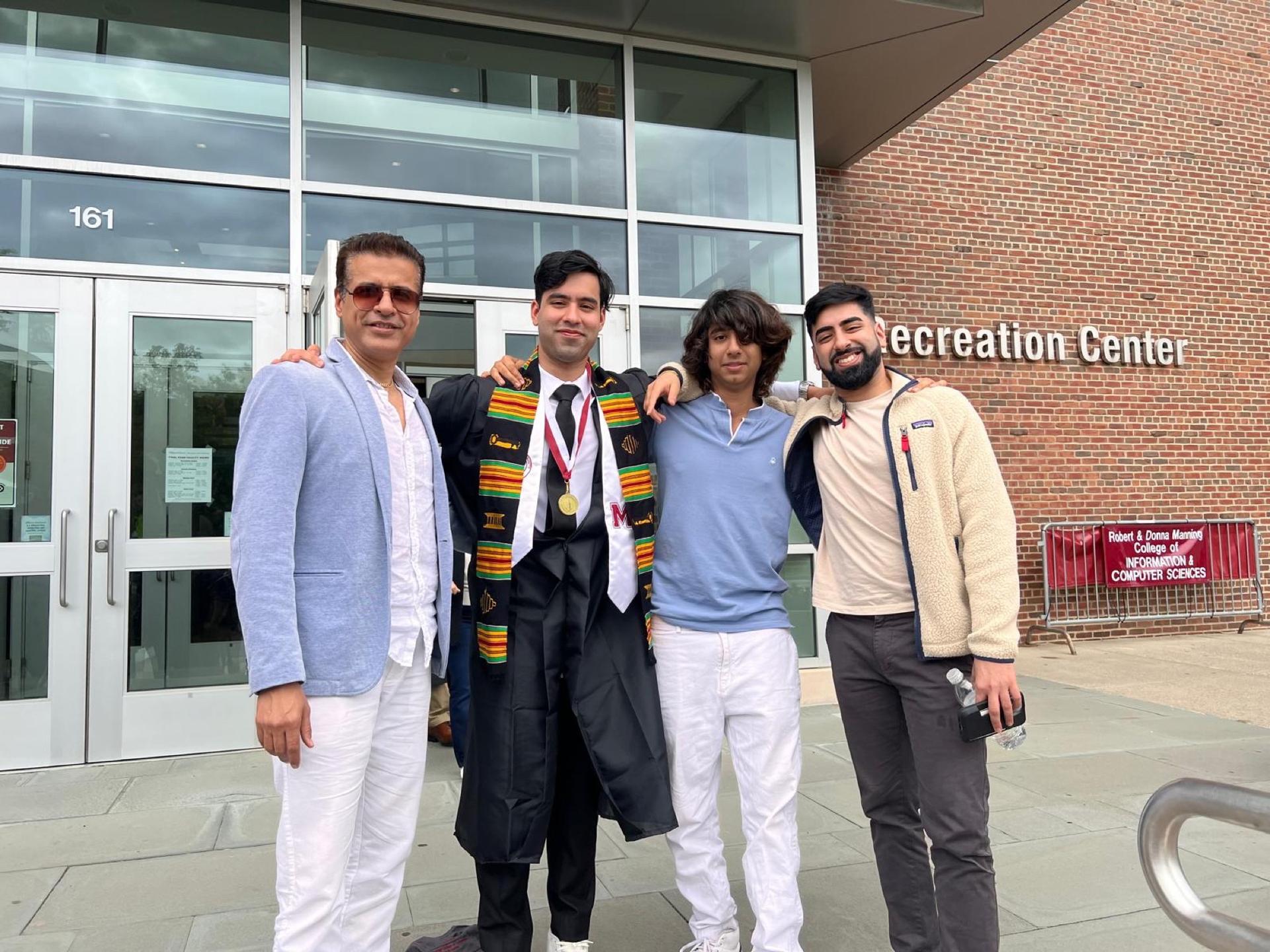
Kabir was at UMass Amherst when this feeling first began to take shape. He was young, ambitious, and close enough to the American economy to see how wealth was built there. But he was also Indian enough to know an older family truth: in many Indian homes, wealth was still spoken about in the language of property.
That language was familiar because he had watched his father invest in real estate. His father looked at real estate through the lens of income. The tenant mattered. The lease mattered. The rent mattered. The location mattered.
Kabir absorbed this quietly.
“I grew up seeing real estate as something serious people did with their money. It was about owning something that could keep working even when you were not watching it every day.”
Later, when he started earning, the question became sharper. Around him, people his age were moving naturally toward stocks. It was easy. You could download an app, buy one share, start small, and feel like an investor within minutes. The market made young people feel included.
Real estate was different. It was expensive, paperwork-heavy, and built around minimums that made a young investor feel he had arrived too early.
Kabir did not want to trade every day. He wanted to understand what he owned. A building made sense to him. A lease made sense to him. A tenant paying rent made sense to him. So he began looking at U.S. real estate the way a young engineer might look at a problem. He compared numbers, studied rental returns, and looked at the difference between Indian real estate and U.S. commercial assets. He also studied why dollar income could matter for an Indian investor whose future was becoming more global.
The conclusion was clear. The opportunity existed. The access did not.
“I remember thinking, this is the asset class everyone respects, but almost nobody my age can enter it properly. Stocks had solved the access problem. Real estate had not.”
Kabir did not begin with a large team, a polished office, or a grand company vision. He began with his own limitation. He wanted to invest in U.S. real estate but did not have the capital to buy a full property. His friends were in a similar position. Some had savings. Some had families curious about investing abroad. But none of them had a simple, credible path.
The idea came naturally. What if several people could own a small part of a good U.S. property?
Fractional real estate itself was not new, and Kabir knew that. The gap was more specific. For an Indian investor who wanted access to U.S. property, the process was still scattered across lawyers, banks, remittance rules, tax questions, unfamiliar structures, and dense documentation.
That became the sharper idea behind Raveum: to make cross-border U.S. real estate access understandable, compliance-supported, and usable for Indian investors.
For a young Indian investor, the need felt obvious. For the legal system, it was anything but.
The moment Kabir tried to turn the idea into reality, the clean concept became messy. There were U.S. securities laws, Indian remittance rules, RBI's Liberalised Remittance Scheme, FEMA-related questions, tax considerations, entity structures, investor agreements, KYC, AML, disclosures, reporting, payment flows, and property-level ownership issues.
Every answer created three new questions. Almost every question ended with the same sentence: “You should speak to counsel.”
So Kabir did.
He spoke to one lawyer, then another, then another. Some understood real estate but not cross-border investing. Some understood securities but not Indian investors. Some understood structure but not the product. Some gave partial answers. Some gave expensive answers. Some made the whole thing feel almost impossible.
“I thought the hard part would be finding good properties. But the first hard part was understanding how to let an Indian investor participate without cutting corners. That was the real mountain.”
It was also an expensive mountain. His savings began to disappear into legal opinions, structuring work, early platform experiments, documents, revisions, and dead ends. At one point, Kabir had spent nearly everything he had on legal fees and development. His cards were stretched. The project still needed money. The platform was not ready. The dream had become heavier than he expected.
For the first time, stopping became a practical option.
He was young. He had a career. He could have told himself the idea was too complicated, invested in stocks like everyone else, and accepted that U.S. real estate was meant for older people, richer people, and people with teams of advisors.
But the problem would not leave him because it was no longer only his problem. He could see the same hesitation in other Indian investors. Young professionals wanted global exposure but did not know where to begin. Families understood property but feared foreign paperwork. Investors wanted dollar-linked income but were wary of hidden risks, legal confusion, tax issues, and unfamiliar platforms.
They were not wrong to be cautious.
In India, trust in financial products is not given easily. It is earned slowly. One unclear document, one hidden fee, one careless promise, and the investor walks away.
Kabir understood this. He also understood that if Raveum was going to serve Indian investors, it could not be built with shortcuts. The platform had to be disciplined first and simple second.
“I did not want Raveum to be a place where people clicked because the design was nice and understood the risk later. The structure had to be right first. The simplicity had to come from doing the hard work behind the scenes.”
That decision shaped the company. Raveum would not try to make U.S. real estate look like a game. It would not sell fantasy. Instead, it would take the difficult parts seriously: the legal structure, compliance flow, onboarding, documentation, property review, investor dashboard, reporting, capital movement, and explanation of what the investor actually owns.
Every place where Kabir had struggled became something Raveum had to simplify for the next person.
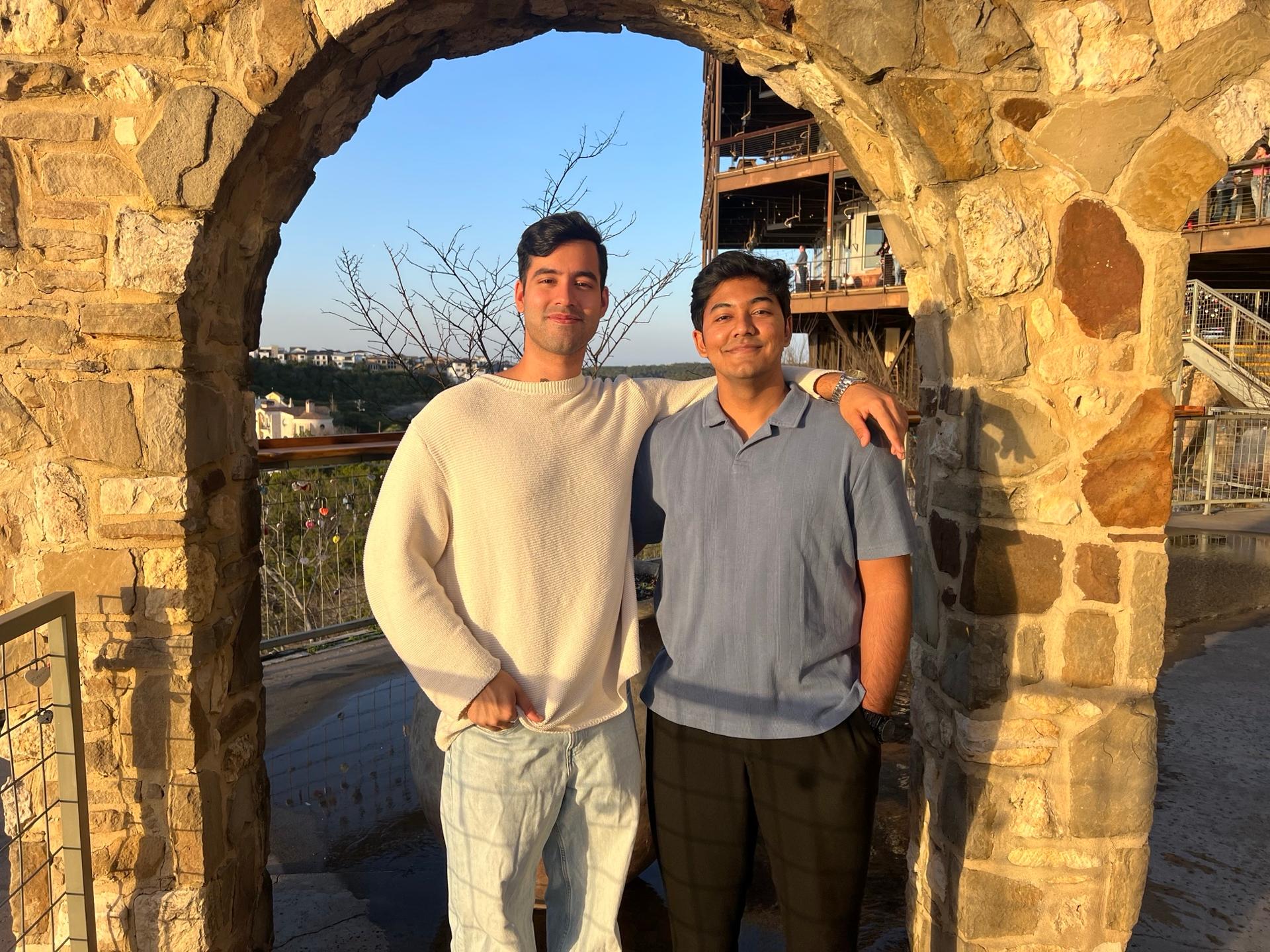
A friend stepped in on the technology side, and the challenge was not merely to build an app. It was to make a regulated, cross-border, property-backed investment understandable to a first-time Indian investor without making it careless.
An investor should not need to become a lawyer to participate. But the platform itself had to respect the law. That was the balance.
Kabir worked on the structure. His technology partner — Ayush Pissurlenkar, Co-Founder and technology lead — worked on making the experience usable. Together, they began shaping Raveum into something that could sit between two worlds: Indian capital and U.S. real estate.
There were still difficult days. Startups rarely move in straight lines. Some deals took longer than expected. Some conversations went nowhere. Some investors were interested but hesitant. Others liked the idea but did not yet trust that something so complex could be made simple.
Kabir heard the same questions again and again.
Is this legal? What exactly do I own? How do I send money? How do I earn income? What happens if I want to exit? Is this a REIT? Is this crypto? Is this another risky app?
Each question told him what Raveum had to become.
Today, Raveum opens access to U.S. real estate for Indian investors with a starting point of $100. The platform focuses on disciplined property selection, cross-border onboarding, compliance-supported processes, and investor visibility. Its purpose is not to tell people that real estate has no risk. It is to make the opportunity clear enough for investors to study it, understand it, and decide.
That entry point matters. It lets a young professional test the asset class. It lets an investor learn. It lets someone who once believed U.S. real estate was only for the ultra-wealthy begin with a smaller step.
Kabir is careful about how he describes this.
“This is not about telling people to put all their money into U.S. real estate. That would be irresponsible. It is about asking a simple question: if this asset class exists, and if it has historically been available only to people with large capital, why should access remain that narrow?”
That question sits at the centre of Raveum.
Not everyone will invest. Not everyone should. But everyone should be able to understand the opportunity clearly enough to decide.
Raveum has now moved far from the days when the idea lived inside Kabir's personal savings account. The company has onboarded U.S. property opportunities, built a growing investor network across India, and created a pipeline connecting Indian capital with American real estate.
Yet the story still goes back to one young man looking at his savings and asking what to do next.
He could have followed the crowd. He could have accepted that real estate was too expensive, too legal-heavy, and too far away. Instead, he stayed with the problem until it became a company.
Years later, the question still feels almost embarrassingly simple.
Why could a young Indian buy a U.S. stock in minutes, but not clearly access a small share of a U.S. property?
That is where Raveum began.
“We built Raveum to give Indian investors a clearer way to access U.S. real estate. Today, investors can start with $1,000, study the asset, understand the risks, and decide with clarity. That is the platform I wish existed when I started.”
A powerhouse Board of Directors.
To ensure Raveum operated with strict institutional discipline from day one, Kabir assembled the people who built the industries he respected.
Glenn Hanson
Founder of Colony Hills Capital, Glenn brings over forty years of commercial real estate experience, having sourced, structured, and closed more than 12,000 units worth in excess of $1.2 billion across the United States.
Hitesh Israni
The pioneering Founder and CEO of Telebrands India, Hitesh built the country's first teleshopping company past $100 million in revenue, bringing a deep focus on governance and ethical leadership.
Manisha Israni
MFA, MBA, with 21+ years of experience, Manisha is a strategic marketing and communications leader focused on clear messaging, global brand trust, and growth-driven outcomes.

Chintan Ghedia
A product and strategy expert specialising in scaling responsible growth models within highly regulated environments.