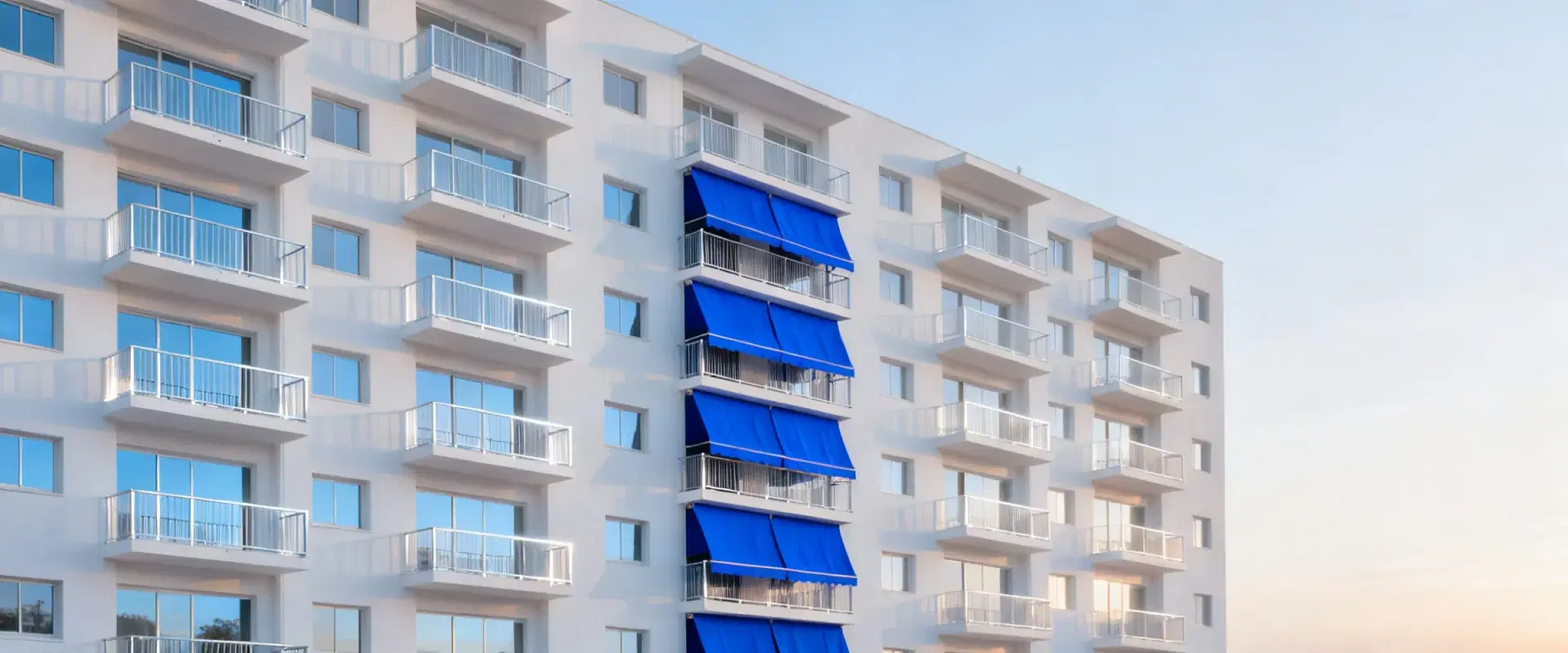
U.S. developers started about 76,000 apartment units in the third quarter of 2026, the lowest quarterly total since 2012, according to an Apartments.com construction update released on 20 November 2026. The figure marks the end of a building wave, and it draws attention to a stage every new building must pass through, the lease-up period, when a finished property fills its empty units for the first time.
For an Indian investor looking at a new U.S. apartment building, the lease-up period is where most of the uncertainty in that building sits. A thinner construction pipeline may ease competition between new buildings over time, but it does not lease any single building for its owner. The guide to U.S. property types and market conditions explains how apartments fit among other property types. This article explains what a lease-up is, why it carries its own risks, and what an investor should check before committing money to a building that is still filling up.
What the Lease-Up Period Means
The lease-up period is the time between the day a new building offers its first unit for rent and the day it reaches stabilised occupancy. Walker & Dunlop, a U.S. commercial real estate lender, describes stabilised occupancy in its glossary as typically 90% or more of units let. Until a building reaches that level, its rent roll is still being built, one lease at a time.
During this stage the property carries most of its costs from the first day. Property tax, insurance, staff, marketing and interest on the construction loan all have to be paid, while rental income covers only part of them. As a result, the gap between income and costs is usually widest at the start of a lease-up and narrows as units are let.
A building that has finished its lease-up is described as stabilised. Its occupancy has settled, its rents reflect the local market, and its income can be measured from actual leases rather than from a plan. That difference shapes how lenders, appraisers and investors value the property.
Why Falling Apartment Starts Matter for Lease-Ups
The Apartments.com update, which draws on CoStar data, shows how far construction has fallen. Quarterly starts in the third quarter of 2026 were down 63% from a peak of nearly 206,000 units in the first quarter of 2022. Over the past 12 months, builders started about 342,000 units, roughly three-quarters of the units completed over the same period. Grant Montgomery, national director of U.S. multifamily analytics at CoStar Group, said that developers are still breaking ground on far fewer projects than they are finishing.
Many buildings started during the boom are only now opening. CoStar counted about 593,000 units under construction in the third quarter, the 14th quarterly decline in a row, and about 446,000 completions over the past four quarters. Separately, Colliers counted about 69,000 new units opening in the third quarter, and CRE Daily, reporting the Colliers figures on 19 November 2026, noted that operators are still filling recently finished buildings.
For a building in lease-up, fewer new competitors nearby can help. Each new building competes most directly with others of the same age and quality, so a lighter pipeline can mean fewer rival properties offering discounts to the same renters. That said, Colliers expects supply to remain concentrated in certain markets, widening the gap between tight markets and those still leasing up. A national figure says little about the street where a particular building stands.
How Lenders Treat a Building Before It Stabilises
Lenders handle a building in lease-up differently from a stabilised one, and their approach shows where they see the risk. Most new buildings are first financed with a construction loan or a short-term loan, which is replaced by a longer loan once occupancy settles. An earlier article explains how short-term bridge loans are used on apartment buildings.
Some permanent lenders will act before stabilisation, but with conditions. A Fannie Mae loan programme for newly built apartments allows a borrower to lock an interest rate up to 120 days before the property reaches stabilised physical occupancy, typically once at least 75% of units are occupied. The loan is sized on the property's expected value once stabilised, and the borrower must show a record of completing lease-ups. In practice, the lender is relying on the plan being met, which is the same assumption an equity investor makes.
Lease-Up Risks and Limits Investors Should Weigh
The main lease-up risk is time. If units fill more slowly than planned, the period of thin income lasts longer, and the owner may need to draw on reserves, ask investors for more capital or extend the construction loan. Interest on a floating-rate loan can rise during that time, which adds pressure on a building whose income has not yet settled.
Concessions are a second risk. To attract the first tenants, owners often offer free weeks or discounted rent, and these can continue longer than planned when nearby buildings do the same. A building can therefore reach its occupancy target while collecting less rent than its plan assumed. A separate article explains why an occupancy rate can hide rent concessions, and the same caution applies here.
There are also limits on what an investor can know in advance. Lease-up plans rest on assumptions about rents, the pace of leasing and the cost of debt, and none of these can be confirmed before they happen. Private real estate investments are also illiquid, so an investor usually cannot exit while a lease-up is under way. Distributions may be small or paid late during this stage, or not paid at all.
For an Indian investor, currency adds another layer. Money sent abroad under the Liberalised Remittance Scheme is invested in dollars, and any income or capital that comes back is converted into rupees at the rate on that day. A longer lease-up extends the period over which that currency exposure in dollar assets matters.
What to Ask About a Building Still Leasing Up
An investor considering a new building can start by asking whether it is in lease-up at all, and if so, how many units are let today and how many are occupied. Leased and occupied are not the same, because a signed lease may start weeks later. The answer shows how much of the building's income is already in place.
The next questions concern the plan. How many units does the sponsor expect to lease each month, and how does that compare with recent lease-ups of similar buildings nearby? What concessions does the plan assume, and for how long? How large is the reserve held to cover costs until stabilisation, and what happens if leasing takes twice as long? A sponsor with a clear answer to the slow case has usually thought hardest about the risk.
Finally, it helps to understand the debt. Investors can ask when the construction loan matures, whether it can be extended, and what conditions a permanent lender will set before refinancing. These details show how much room the building has if the lease-up runs late.
A Thinner Pipeline Does Not Lease the Building
The fall in U.S. apartment starts is a market fact, and it may make the years ahead less crowded for buildings now opening. Even so, every new building still has to complete its own lease-up, on its own street, against its own competitors. The national pipeline sets the backdrop, while the lease-up plan, the reserve and the debt decide how one building comes through.
For an Indian investor, the practical step is to place any new building on a simple line between under construction, leasing up and stabilised, and to judge it according to where it sits. The U.S. real estate market guide covers how different property types and markets behave across that cycle. Eligible investors can review how investing in U.S. real estate from India works on Raveum, including the property, sponsor, ownership structure, fees, risks and offering documents for each opportunity.
Frequently Asked Questions
What Does Lease-Up Mean in Real Estate?
Lease-up is the stage when a newly built or fully renovated property rents out its units for the first time. It starts when the first unit is offered and ends when occupancy settles at a stable level. During this stage costs run in full while rental income is still building, so the property is more exposed to delays.
How Long Does a Lease-Up Period Take?
There is no fixed length. It depends on the size of the building, local demand, rents and how many new buildings nearby are leasing at the same time. A sponsor's plan sets an expected pace, but leasing can run slower or faster, so investors should ask what happens to the building if it takes longer.
What Is the Difference Between Lease-Up and Stabilisation?
Lease-up is the process of filling a new building, and stabilisation is the point where that process is complete. A stabilised property has settled occupancy, rents in line with its market and income that can be measured from actual leases. Lenders and appraisers usually treat stabilised buildings as less uncertain than those still leasing.
What Is Lease-Up Risk for an Investor?
Lease-up risk is the chance that a new building fills more slowly, or at lower rents, than its plan assumed. A slow lease-up can use up reserves, delay or stop distributions, require more capital from investors, or make refinancing harder. Investors in private real estate can also lose part or all of their capital.
Why Do New Apartment Buildings Offer Concessions During Lease-Up?
New buildings often offer free weeks or reduced rent to attract their first tenants, especially when several new buildings nearby compete for the same renters. Concessions help fill units faster, but they lower the rent actually collected. Investors should check how long a plan assumes concessions will last and how much they cost.
Is a Building in Lease-Up Suitable for You as an Indian Investor?
It depends on your goals, your time horizon and how much uncertainty you can accept. A building in lease-up carries more risk than a stabilised one, and private real estate is illiquid, so money may be committed for years. Discuss your situation with your CA and financial adviser before investing.
This article is for general education only and is not investment, tax or legal advice. Rules change and depend on individual circumstances. Investing in private real estate involves risk, including loss of capital, illiquidity, falling property values, distributions not being paid and currency movements. Participation is limited to non-U.S. persons under SEC Regulation S and verified U.S. accredited investors under Regulation D Rule 506(c), and offerings on Raveum are not open to the general public.