Updated June 2026
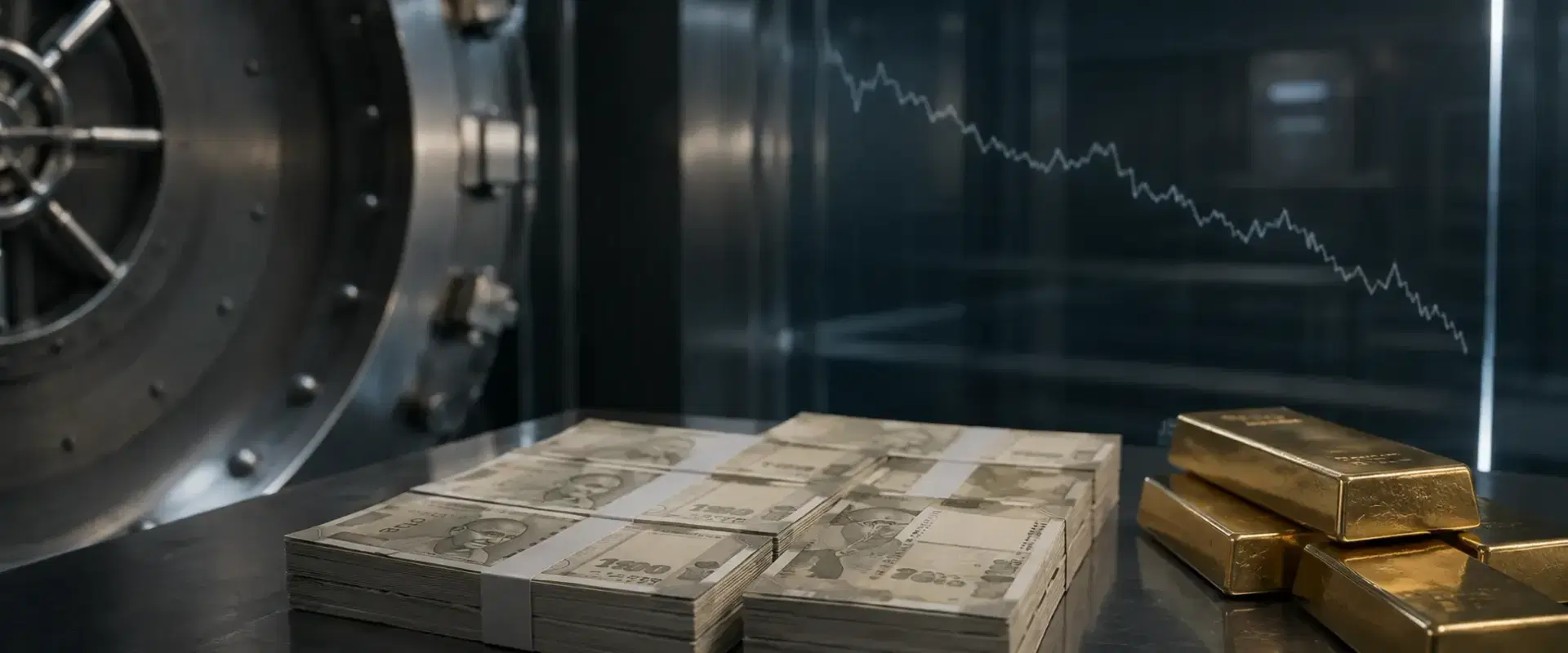
India’s foreign exchange reserves fell by USD 9.985 billion to USD 671.625 billion during the week ended June 12, 2026. The decline was driven mainly by a sharp fall in the reported dollar value of India’s gold reserves. At the same time, foreign currency assets the largest part of the reserve portfolio increased.
This distinction matters. The headline shows a large decline, but the underlying data do not suggest that every part of India’s foreign exchange position weakened at the same time.
Key Takeaways
- Reserve composition matters: The decline came mainly from gold reserves, while foreign currency assets increased.
- Currency matters to investors: Changes in the rupee can affect inflation, overseas expenses and the global purchasing power of Indian wealth.
- Diversification should be evaluated thoughtfully: Exposure across markets, currencies and asset classes can create balance, but every investment should be assessed on its own merits.
What Happened to India’s Forex Reserves?
India’s total foreign exchange reserves stood at USD 671.625 billion for the week ended June 12, down from USD 681.610 billion in the previous reporting week.
The reserve portfolio consisted of:
- Foreign currency assets: USD 544.290 billion
- Gold reserves: USD 103.821 billion
- Special Drawing Rights: USD 18.699 billion
- India’s reserve position with the IMF: USD 4.815 billion
Foreign exchange reserves are external assets held by the Reserve Bank of India. They include major foreign currencies, gold, Special Drawing Rights and India’s reserve position with the International Monetary Fund.
These reserves act as an external financial buffer. They help India meet foreign-currency obligations, pay for essential imports and manage periods of volatility in global capital and currency markets.
For investors, the level of reserves matters, but so does the composition of those reserves and the reason behind any weekly change.
Why Did Reserves Fall So Sharply?
The largest movement came from gold reserves, whose reported value fell by USD 10.754 billion to USD 103.821 billion.
Gold reserves are reported in U.S. dollar terms. Their reported value can therefore change when international gold prices or exchange rates move, even if the underlying quantity of gold does not change.
For example, if an institution owns gold valued at USD 100 million and the market price falls by 10%, the reported value declines to USD 90 million. The institution may still hold the same amount of physical gold, but its market value is lower.
The weekly reserve data show the value of India’s gold holdings. A fall in that value does not, by itself, prove that RBI sold physical gold.
This is why the overall reserve decline should not be interpreted only as dollars leaving India. Much of the weekly change reflected a movement in the reported value of one reserve asset.
Why Did Foreign Currency Assets Increase?
India’s foreign currency assets increased by USD 846 million to USD 544.290 billion during the same week.
Foreign currency assets are the largest component of India’s forex reserves. Although they are reported in dollars, they may include assets denominated in currencies such as the euro, pound and yen in addition to the U.S. dollar.
Their reported value can change because of purchases and sales, investment income and movements in global exchange rates.
The increase in foreign currency assets is an important part of the latest update. It shows that the decline in total reserves was concentrated mainly in gold valuation rather than spread across every major reserve component.
Special Drawing Rights declined by USD 66 million to USD 18.699 billion, while India’s reserve position with the IMF fell by USD 11 million to USD 4.815 billion. These were relatively small movements compared with the change in gold reserves.
Should Investors Be Worried?
A single weekly decline does not, on its own, signal a currency or economic crisis.
Forex reserves naturally move as the value of reserve assets changes and as RBI manages currency-market conditions. The central bank may sell dollars when the rupee is under sharp pressure and purchase dollars when foreign-currency inflows are stronger or when the rupee appreciates.
The objective is generally to reduce disorderly currency movements rather than maintain one fixed exchange rate.
Investors should therefore look at the direction of reserves over time, the reason for the movement and the strength of the major reserve components. A valuation-driven decline has a different meaning from a sustained fall caused by large capital outflows or repeated currency intervention.
India still holds a substantial reserve buffer. However, reserves remain important because the country imports large quantities of crude oil and other goods that must be paid for in foreign currency. Oil prices, global interest rates and international capital flows can therefore influence both the rupee and the reserve position.
What Does This Mean for Indian Investors?
The latest reserve data offer three practical lessons.
1. Understand What Is Behind the Headline
A large fall in total reserves may appear alarming until the underlying components are examined.
In this case, the fall was driven mainly by the reported value of gold reserves, while foreign currency assets increased. Investors should apply the same discipline to personal investments by looking beyond a headline return or a single market movement.
The composition of a portfolio often explains more than its total value alone.
2. Currency Affects Real Wealth
An investment return should not be judged only by the number shown in rupees.
Currency movements can influence import costs, inflation and the amount Indian investors must spend on overseas education, travel, healthcare or international investments. They can also affect the value of foreign assets when those assets are converted back into rupees.
This does not mean that rupee-denominated assets are weak or that foreign-currency investments are automatically better. It means that investors should understand how much of their wealth depends on one currency and how currency movement may affect their long-term goals.
3. Evaluate Diversification Thoughtfully
Indian assets can remain an important part of a long-term portfolio. Global diversification does not require investors to move away from India’s growth story.
It means considering whether a portfolio is concentrated in one country, currency or economic cycle.
International exposure may allow investors to participate in different markets and sources of income. However, global investments also involve their own property, market, tax, currency and regulatory considerations.
Diversification is therefore not simply about owning more investments. It is about combining exposures that respond differently to changing economic conditions.
Where Can U.S. Real Estate Fit?
U.S. real estate is one option for Indian investors considering global diversification. It can provide exposure to a large property market, potential rental income in dollars and ownership linked to a tangible asset.
For investors whose income, savings and existing property are concentrated in India, U.S. real estate may introduce exposure to another market and currency.
Fractional ownership can reduce the amount of capital required to participate in selected properties. Professional platforms may also help investors understand the ownership structure, property information, sponsor, projected returns, holding period and applicable cross-border process.
The suitability of any opportunity still depends on the underlying property, sponsor, financing, fees and investment structure. Dollar exposure should be considered one part of the investment rather than a substitute for evaluating the asset itself.
Raveum helps investors understand how selected U.S. real estate opportunities are structured, evaluated and made accessible through transparent, compliance-led processes.
The Bottom Line
India’s nearly USD 10 billion weekly reserve decline was significant, but the composition of the decline provides important context. Gold reserves recorded a sharp fall in reported value, while foreign currency assets increased.
For investors, the larger lesson is to examine what lies beneath a headline. Portfolio value can be influenced by asset prices, currency movements and market conditions even when the underlying holdings remain in place.
A strong investment strategy should consider return, risk, taxation, liquidity and currency exposure together. The objective is not to respond to every weekly announcement, but to understand how broader financial developments may affect long-term wealth.
Frequently Asked Questions
What Are India’s Forex Reserves?
India’s forex reserves are external assets held by the Reserve Bank of India. They include foreign currency assets, gold reserves, Special Drawing Rights and India’s reserve position with the International Monetary Fund. These reserves help India meet foreign-currency obligations and manage periods of global financial pressure.
Why Did India’s Forex Reserves Fall by Nearly USD 10 Billion?
India’s forex reserves fell mainly because the reported dollar value of gold reserves declined by USD 10.754 billion. Foreign currency assets increased by USD 846 million during the same week, showing that the decline was concentrated largely in gold valuation.
Did RBI Sell Gold When the Value of Gold Reserves Fell?
Not necessarily. RBI reports the value of its gold reserves in U.S. dollars. That value can fall when international gold prices or exchange rates change, even if RBI continues to hold the same quantity of physical gold. Weekly valuation data alone do not confirm that gold was sold.
How Can Foreign Currency Assets Rise While Total Forex Reserves Fall?
Total forex reserves combine foreign currency assets, gold, Special Drawing Rights and India’s IMF reserve position. A large decline in one component can outweigh gains in another. In this case, the fall in gold reserves was greater than the increase in foreign currency assets.
How Do Forex Reserves Affect the Rupee?
Forex reserves give RBI greater capacity to manage sharp currency movements. RBI may supply dollars when the rupee faces disorderly pressure or purchase dollars during periods of stronger inflows. Reserves can support currency stability, but they do not fix the rupee at a guaranteed exchange rate.
Should Investors Change Their Portfolios Because Forex Reserves Fell?
A single weekly movement should not determine an investment decision. Investors should examine the reason behind the decline and consider their broader exposure to markets, currencies and asset classes. Diversification should be based on long-term goals, risk tolerance, costs, taxes and liquidity needs.
Can U.S. Real Estate Support Global Diversification?
U.S. real estate can add exposure to another property market, currency and potential source of rental income. Fractional ownership may reduce the capital required to access selected properties. However, investors should still evaluate the asset, sponsor, fees, legal structure, holding period and cross-border requirements.
Primary Data Source
Reserve Bank of India, Weekly Statistical Supplement, data for the week ended June 12, 2026.
Educational Disclaimer
This article is provided for general educational purposes only. It does not constitute financial, legal, tax or investment advice, an offer to sell securities or a recommendation to invest.
Investments involve risk, including possible loss of capital and limited liquidity. Regulations and tax treatment may change. Investors should review the relevant documents and obtain appropriate professional advice before making an investment decision.